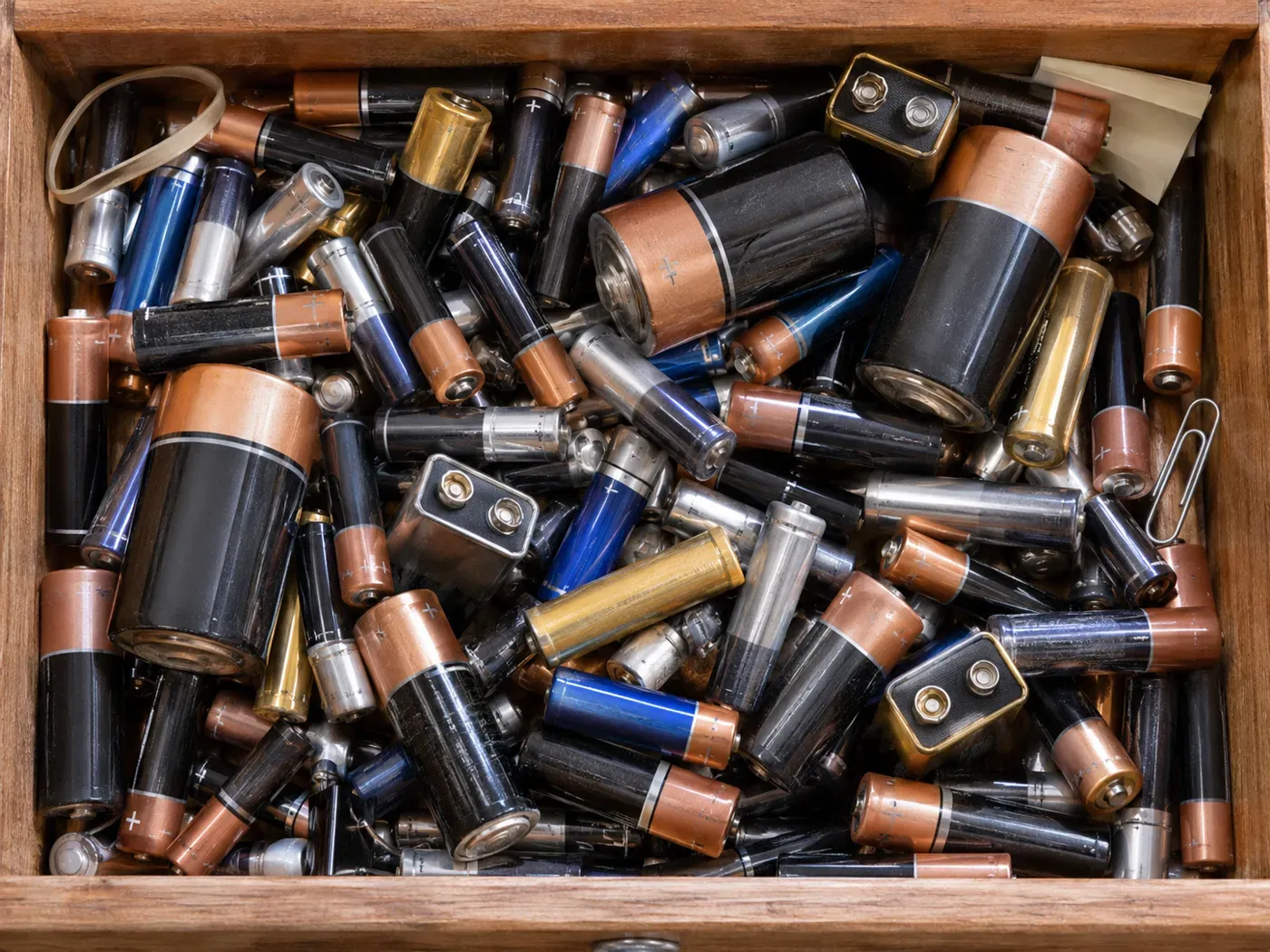
Why does a drawer of loose batteries cause problems?
When loose batteries roll together, their ends can touch each other or a stray key, coin or paper clip. That can drain them, and with 9V batteries it can short the terminals and make them hot. Old and new batteries also get mixed up, so you never know which ones still work.
Where should you keep them?
- Somewhere cool and dry, at normal room temperature. Avoid sunny windowsills, radiators, cars and damp sheds.
- Not in the fridge. Standard alkaline batteries do not need it, and condensation can damage them.
- In their pack or a case, so the ends stay apart and each size has its place.
How should you store each type?
| Battery | Watch out for | How to store it |
|---|---|---|
| AA and AAA | Ends touching in a loose pile | Upright in a case or in the original pack |
| C and D | Heavy, and easy to mix old with new | In a case, with old and new kept apart |
| 9V | Both terminals on top, so they can short | In a case, or with tape over the terminals |
| Button batteries | Very dangerous if swallowed | In a closed pocket, out of reach of children |
If a child may have swallowed a button battery, go to A&E straight away.
How do you stop batteries leaking?
- Take batteries out of anything you will not use for a few months.
- Do not mix old and new batteries, or different brands, in the same device.
- Check the expiry date on the pack, and use the oldest first.
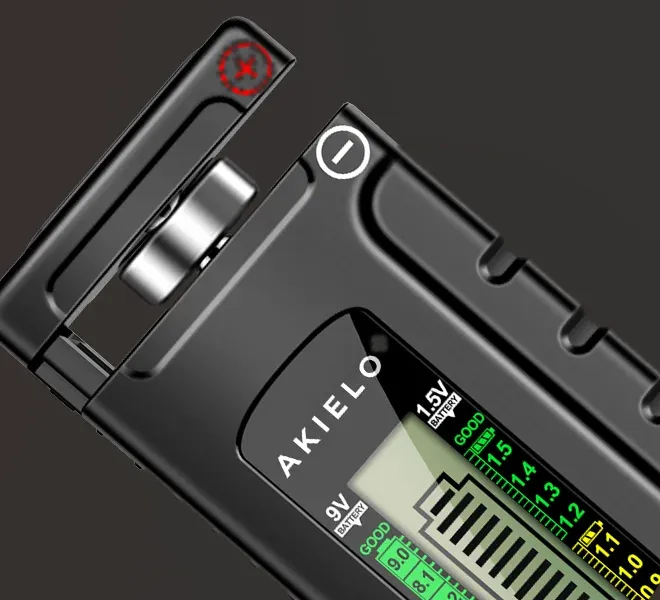
- Test batteries before you store them, so only good ones go back in the case.
What should you do with old batteries?
Do not put them in household rubbish. Keep used batteries in a separate box, with tape over 9V terminals, and take them to a battery recycling point. Most UK shops that sell batteries have a collection bin.

Every battery in its place
Battery Storage Case
Holds 150+ batteries in the Max Edition or 90+ in the Core Edition, with a battery tester and a zipped pocket for button batteries.
About this guide
Written by the AKIELO team, makers of everyday carry since 2017.